
The Gorbals: Glasgow, Immigration, and the Coal Economy
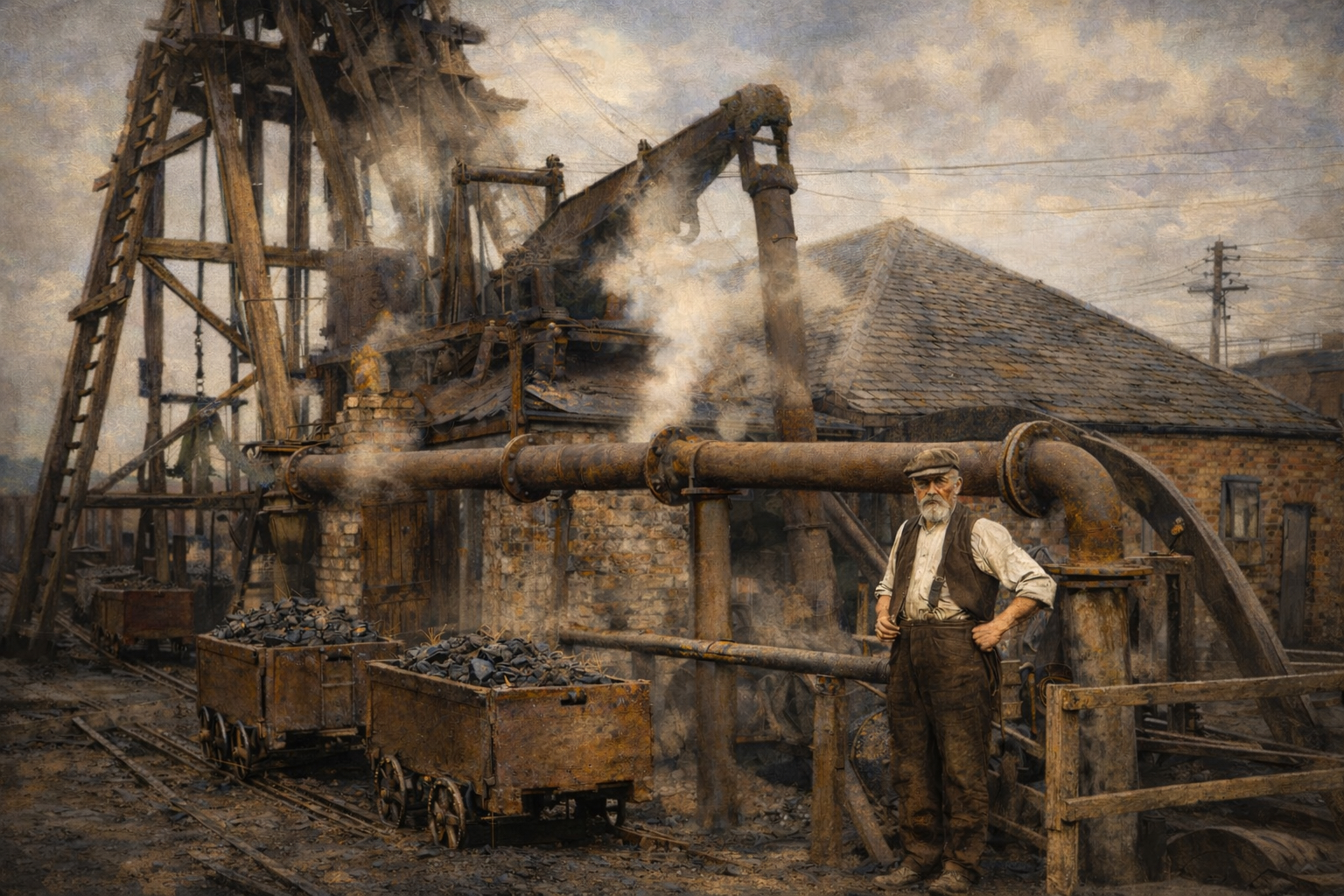
The Gorbals was one of Glasgow’s best-known working-class districts. Located on the south side of the River Clyde, it changed from a small settlement into a densely populated urban area as Glasgow expanded during the 19th century.1 Its growth was closely tied to the city’s industrial economy, which created demand for workers in shipbuilding, manufacturing, transport, and coal mining.1, 3
By the late 19th and early 20th centuries, the area was known for overcrowded tenements and for the number of migrant communities that lived there. These included Irish, Italian, Jewish, Polish, and Lithuanian families, among others.1, 3, 8 The Gorbals became part of a wider story of movement into Glasgow, where newcomers often settled in the cheapest housing available and built community life under difficult conditions.3, 8
Lithuanian migration to Scotland
Lithuanian migration to Scotland increased in the late 19th century and the years before the First World War.2, 7 Many migrants came from the Russian Empire, where Lithuanian language and Catholic identity were under pressure, and where economic conditions in rural areas were poor.2, 7 They arrived in Britain seeking work and a more secure future, although many did not initially expect to enter heavy industry.2
One such migrant was Ipolitas Smilgjus who arrived in Scotland in 1911. Scottish employers were actively recruiting labour at the time, especially for coal mining.2, 5 Some recruitment was poorly managed, and there were repeated misunderstandings between employers and migrants about the kind of work being offered. In a number of cases, men who had been told that agricultural work was available found themselves sent to coalfields instead.2, 5 This is one reason Lithuanian migration became closely associated with mining in Scotland.
Coal mining and the demand for labour
The demand for coal miners was strong because coal remained central to Scotland’s economy.2, 5 It powered industry, railways, domestic heating, and many of the businesses that supported Glasgow’s growth. Mining was dangerous, but employers still needed large numbers of workers, and migrant labour was an important part of that supply.2, 7
Lithuanian miners often worked in Lanarkshire coalfields serving the Glasgow area.2, 5 They were sometimes described inaccurately as “Poles” or “Russian Poles” in official records and in popular usage, which makes tracing individual family histories more difficult.2, 7 Like many migrant workers, they sometimes faced suspicion from local communities and unions, particularly during periods of labour tension.2, 7
The Gorbals as a settlement area
The Gorbals was not unique to Lithuanians, but it was part of the wider urban landscape in which migrant families lived and worked.1, 3, 8 Its proximity to the city centre, river crossings, markets, and transport routes made it a practical place to settle. Housing was often poor, but the area provided access to employment and to established community networks.3, 8
For some Lithuanian families, the Gorbals formed part of a first stage of settlement in Glasgow before later moves to other districts or to towns in Lanarkshire and beyond.2, 5 Others remained in the area for longer periods and became part of its social fabric. In family histories, the Gorbals often appears not as a place of origin, but as a place where a new life had to be built under difficult circumstances.3, 8
Family history context
For family historians, the Gorbals matters because it reflects the working conditions and housing realities that shaped the lives of many immigrant and labouring families in Glasgow. It was a place of hard work, limited space, and constant movement, but also one where families created routines, faith communities, and support networks.3, 8
In that sense, the district is useful not only as a location, but as historical context for understanding the lives of fathers and grandfathers who lived there. Their stories are part of a larger pattern: migration, industrial work, urban crowding, and adaptation in a changing city.2, 5
Footnotes
- Gorbals — Wikipedia
- Lithuanian miners in Scotland: migration and misconceptions — Our Migration Story
- 1914 to 1950s: Neighbourhoods: The Gorbals — The Glasgow Story
- Gorbals — Points of Arrival, University of Edinburgh
- Lithuanians in Lanarkshire — Family History
- Lithuanians in Glasgow — RootsChat discussion
- Why did Lithuanians migrate to Scotland in the 19th century? — BBC Bitesize
- Memories of the Jewish Gorbals — University of Edinburgh
Lithuanian migration to Scotland
From BBC Bitesize
- Lithuanians migrated to Scotland in the mid-1800s due to persecution in their homeland in the Russian Empire and due to severe famines in the 1890s
- Most Lithuanians planned on travelling to a new life in America, but around 6,000 settled in Scotland, finding work in coal mines and other heavy industries
- Significant Lithuanian communities formed in Lanarkshire, with Catholic Lithuanians in Bellshill and Jewish Lithuanians in Glasgow’s Gorbals area
- Lithuanians faced hostility due to cultural differences, competition for jobs, and religious tensions
- Scots feared Lithuanians were being used by companies as ‘strike-breakers’
- Lithuanian’s faced difficulty is maintaining their identity, but Lithuanian priests, language classes, and cultural events helped protect the culture
- The 1914 Aliens Restrictions Act and the 1917 Anglo-Russian Military Convention led to deportations and the eventual decline of distinct Lithuanian communities in Scotland
- Decline in heavy industry led to the break up of communities and Lithuanian’s largely disappeared as a distinct group
For more information
Websites
- The Glasgow Story — useful background on the city’s neighbourhoods and social history.
- Points of Arrival — migration history resources connected to Glasgow and Scotland.
- Our Migration Story: Lithuanian miners in Scotland — migration history across Britain, including Lithuanian settlement.
Videos
Smith Family Roots Ancestor
- Ipolitas Smilgjus (1891 – 1974)